The Red Tailed Hawk in sharp pursuit with its piercing yellow eyes finds its prey. Unfortunately, the prey on this day was me! I watched with my camera in focus, standing my ground as the hawk swooped down with its sharp talons tucked securely under its signature red tail ready to strike at a moment’s notice. I snapped a few photos as it continued its focused descend towards me and I began to realize the red-tailed hawk was getting much too close for my comfort before the size of its target (me!) became apparent to him and he swerved effortlessly from his 100 miles per hour dive outward and disappeared into the countryside. As I walked away, the hawk came back and made a few passes high in the sky above not completely convinced he wasn’t up to making a meal of me…nor was I completely convinced he woundn’t have! -W
Red-tailed Hawk Finds Its Prey © All Contents Copyright

*2016-1031 UPDATE My photography gear has been upgraded a few times since this blog was first published back in 2011, but the techniques described here are still applicable and generally timeless.
*This blog was originally published on March 3, 2011 on my Studio-Z site. I am porting it here since this is now my main site.
* If you like any of the photos on this blog or if you want to see more of this type of blogs, pick on the image to purchase a Fine Giclee Print which will contribute to future blogs like this. Additional “Birds of Prey” Art and Photography can be found here. Thank you.
Golden Rules numbers one and two about photographing birds – all birds are creatures of habit and will follow the food source year round. If you get nothing else from this blog, take with you those two golden rules and you will be rewarded time after time by the bird gods! Shorebirds follow their food source in the Fall and Spring in their Migration along the Pacific Flyway from Alaska to Pentagonia. Hawks and other birds of prey are no different, they just have a relatively more limited area to cover, though some hawks from the far North do make a short migration during the Winter. You can spot hawks wherever there is an abundance of food source such as the wide open countryside where their staple of voles, rabbits, and other small mammals can be found. Large hawks like the Red-tailed Hawk tend to perch on high objects like trees and telephone poles, scouring the fields for anything that moves. Smaller hawks like the American Kestrel can be seen on smaller branches and telephone wires. Some hawks like the Sharp-Shinned Hawk and the Cooper’s Hawk may even be in your backyard looking for small birds to feed on. You can even attract the Sharp-Shinned and Cooper’s Hawk by adding a bird feeder to your backyard.
A Cooper’s Hawk with small bird grasped in its claws © All Contents Copyright

There are a number of different types of Hawks and a good online source to identify them can be found at http://www.birds.cornell.edu. In this blog, I will focus on one of the most common large hawks in North America, the Red-Tailed Hawk.
Most of the time when I’m driving along the countryside, my eyes are constantly looking around for hawks and other large birds like the Turkey Vulture and even Egrets depending on how close I am to a large body of water. But hawks and specifically Red-tailed Hawks are what I am looking for. As mentioned before, they tend to perch on high objects and actually are not that difficult to spot once you know what to look for. Their sillouete against the sky usually gives them away. If you’ve looked at telephone poles and tops of trees long enough, you will know when there is a big lump atop these objects and that big lump is usually a Red-tailed Hawk. You can also look for movements in the sky and again, Red-tailed Hawks tend to give themselves away by their shape and size. After awhile, you may also pick out their flight pattern and be able to quickly distinguish a Red-tailed Hawk from other big birds like the Turkey Vulture which tend to glide in a somewhat unbalanced fashion as if it was about to tip one way or the other. The Red-tailed Hawk on the other hand will either glide in large circles or fly in a determined manner.
Once you’ve found a perched Red-tailed Hawk, watch it until it flies away, make a note of where and when you saw the hawk. Wait awhile and see if the hawk comes back to the same perch or another one nearby. If it does come back after awhile, you can be pretty sure that that hawk will be there around the same time the following day. If the food source is in abundance at that location, that hawk may be there every day for a very long time. But if you’ve waited awhile and still don’t see the hawk come back, don’t be discouraged, come back the next day at about the same time and see if you can spot that hawk again. You will want to drive around a bit and find a few locations where a hawk will perch and make the same note for each. If after coming back to the same place a number of times and you still don’t see the hawk again, move on, as the hawk may have done so as well, likely because the location was either a short resting place for the hawk or the food source was not as abundant or the food source just simply ran out.
There are a few places in my area that I know I can find a Red-tailed Hawk everytime I go. The aforementioned countrysides, whether it be driving along Napa, California or up highway 101 towards Point Reyes or down Highway 1 towards Halfmoon Bay or down highway 80 from the Bay Area onwards through Sacramento and beyond. But there are 2 places that I go to for birds in general where there is also a resident Red-tailed Hawk that comes out to greet me everytime I go there! One of those places is The Baylands and Bixbee Park area in Palo Alto, CA. The area is a Nature Preserve and a resting place for shorebirds along the Pacific Flyway. As an added bonus, there are a couple of Northern Harriers or Marsh Hawks at Bixbee Park that are fearless and will also fly right up to 10 feet of you to greet you! I suppose hawks at this place are just very cordial! Once these Harriers begin their hunting routine for the day, they will be seen cruising the same spot every 10-15 minutes for the next couple of hours. The other place is the Yolo County Wildlife Area off of Highway 80 just before the causeway if you’re coming down from the Bay Area. Along the self-guided auto tour at the Yolo County Wildlife Area, there is an area with a single tall tree where a Red-tailed Hawk perches in search of its prey. There are scores of other waterfowls there too as well as a number of birds of prey like Harriers, Kestrels, Red-Shoulder Hawks, and Owls.
Very cordial Northern Harrier at Bixbee Park in Palo Alto, CA © All Contents Copyright

OK, so now that we know how to find a Red-tailed Hawk, how do you stalk and photograph them? Well, therein lies the conundrum! Birds of prey are way too smart and visually alert to allow itself to be stalked. They are the master stalkers far more masterful than any human will ever be. You may think you are stalking them, but they are simply letting you have your fun (and probably having a few chuckles with other Hawks!). The only thing you can really do is to find them, understand their pattern, and rely on the two aforementioned golden rules of birds, they are Creatures of Habit and they tend to follow the food source. Knowing this, your next plan of attack is to…..well, wait! Wait for the hawk to show up where you know they will show up. Be patient. But don’t wait too long, if they don’t show up after awhile, go to your next location and then the next, keeping your eyes out for the hawk(s) as you drive since they can be anywhere along the general area. When they do show up, there are a few simple things you can do to increase your chances of getting a photograph of the hawk and they all entail common sense. Don’t make any quick moves and make as little noise as you can – you simply don’t want to spook the hawk. If you think you can sneak up on a hawk before they notice you, rest assure they saw you coming from miles away. They can see little voles in the camouflaged landscape – to the hawk, you are a large bumbling elephant! They’re not so much afraid of you sneaking up on them as they are afraid you might scare off the small creatures they are hunting. If you are driving when you spot the hawk, park about 200 feet from where the hawk is perched, get out of the car and DON’T slam the door! (And perhaps one more golden rule, look out for oncoming cars! You can’t get a photo shot off if you’re laying flat and immobile on the pavement like a roadkill!) If you have good long glass, raise your camera slowly (again, no quick movements!) and take a few quick photos of the hawk from your distance just in case this is the only photo-opportunity you will get! The camera and lens itself can scare off the hawk as it tends to stand out in the crowd and I’d imagine the lens would look like one big eye to the hawk! Some photographers even get camouflage coverings for their lens to try and conceal it though its effectiveness is questionable. Once you’ve gotten your couple of “just in case” shots, lower your camera and point the lens towards the ground. Lower your head and walk slowly and quietly towards the hawk. Take a few quick glimpses at the hawk if you can so as to get a gauge of where the hawk is. Hawks HATE eye contact so the less you look at the hawk the better chances you will have to get closer to it. Even as you take your glimpses at the hawk, don’t look directly at its eye, try to look at its body and legs as the legs will be the first sign that the hawk is uncomfortable with you. If the legs are starting to coil, the hawk is usually readying itself to take off. And if the hawk looks like it’s about to take off, don’t panic, just stop in your tracks while trying to keep an eye on the hawk from the corner of your eyes, again, no direct eye contact! By the way, you should always keep both your hands on your camera with the camera faced down but always ready to raise the camera for your shot while you approach the hawk as well as when you stop your approach. Wait for the hawk to make the next move. Normally, once you’ve stopped your approach, the hawk will calm down in minutes and you can see this in the hawks body language, mainly how the legs are positioned. If the hawk does calm down, give him a few more minutes before continuing your approach. But this time, approach the hawk with added caution as once it’s shown that it will fly, the next time the hawk coils its legs, it will likely do so in a more confident manner and take off on a dime! Before you resume your approach or if you think you are close enough to the hawk already, slowly raise your camera and take your shots, but keep in mind that there is now a better chance the hawk will fly and so be ready to do some quick Birds in Flight Photography. That’s all there is to it! Once you’ve gotten your perched shots of the hawk, you will want to wait for it to take flight as photographing the Red-tailed Hawk in flight or any bird in flight is one of the best enjoyments of photographing birds in general. See my Birds in Flight Photography blog for more tips. And see my “Flight” online photo gallery for images of Birds in Flight.

Hope this blog helped to motivate you to go out there and try photographing some Hawks, namely Red-tailed Hawks, and hope you come to enjoy it as much as I have in all the years I’ve been photographing them. Good luck!
Below are a few of my own personal favorite photographs of Hawks. I’ve enhanced a few by applying a texture to them to turn it into a more artistic presentation and you can learn how to do the same by going to my blog “Turning Photographs Into Art With Texture by Wingsdomain”. If you like any of the photographs below or throughout this blog, pick on them to see more details and purchase a fine art gliclee print. Buying a print from my website is how I am able to write blogs like this to help you my viewers understand, appreciate, and capture birds of prey photographs. Your contribution is appreciated. Additional “Birds of Prey” Art and Photography can be found here. Thank you.
.
.
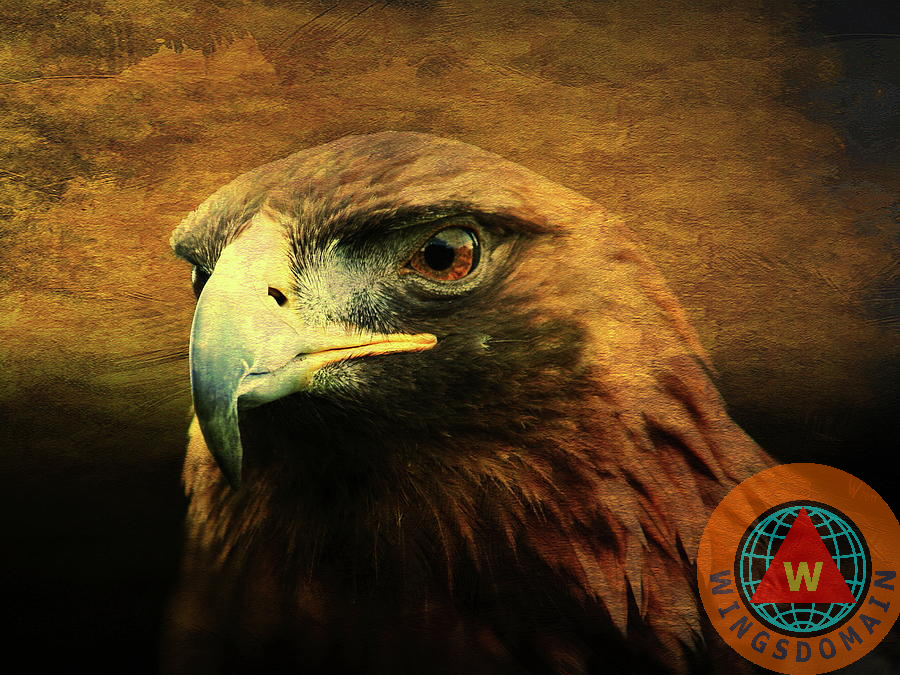
Eyes of the Golden Hawk © All Contents Copyright
.
.
.
.
.
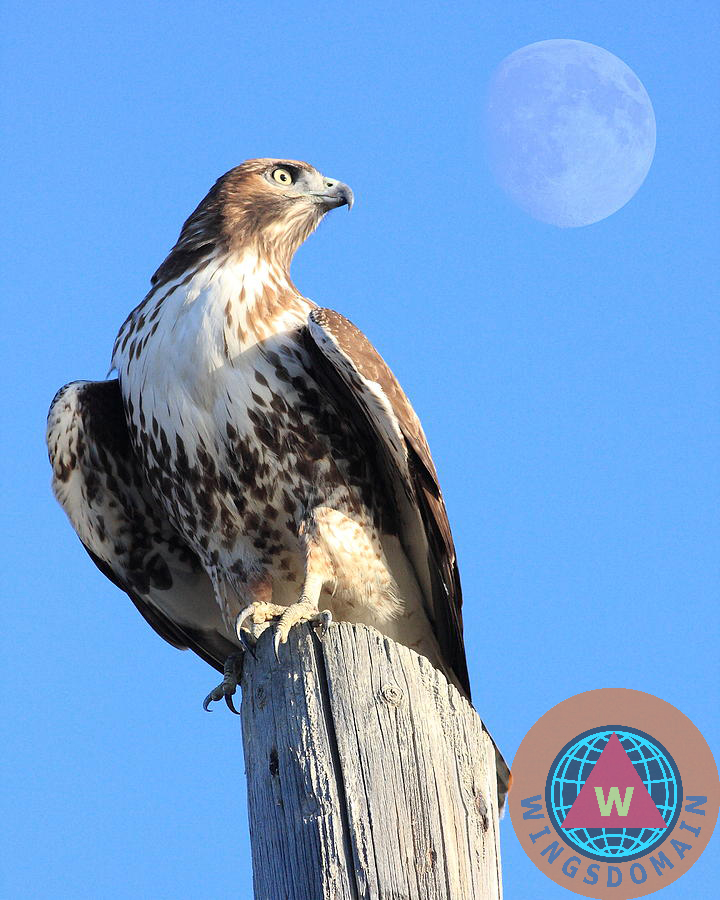
Red-tailed Hawk and Moon © All Contents Copyright
.
.
.
.
.
Before Memory I Have Soared With The Hawk © All Contents Copyright

.
.
.
.
.
Soaring Hawk © All Contents Copyright

I have soared high in the skies throughout time. Have seen the world raised from infancy through eternity. All the sights I’ve seen, all the laughter and tears of man, all the creations and destructions, and all the songs and voices I’ve heard, they were all but a moment in time. -W
.
.
.






© All Contents Copyright
© All Contents Copyright

























































































































































































































































































































MUSEUM QUALITY PRINTS can be purchased from any image on my website. If you just want a simple print that’s rolled in a tube, that’s great! If you want it framed, we’ll do that too! We also sell canvas prints, metal prints, and more. All of our premium papers and canvases are acid-free and, with proper care, will last for generations. Unframed prints are shipped in sturdy 1/4″ cardboard tubes and include a 1″ white border to allow for future matting and framing. Prints may also be shipped in flat packaging upon request. Pick your favorite art and photography from my website, and a museum-quality masterpiece will be on its way to you within 2 – 3 business days!
FRAMED PRINTS are offered in 230 frames and 100 mats which can be used to create museum-quality masterpieces from any image on my site! All framed prints are assembled, packaged, and shipped by our expert framing staff and arrive “ready to hang” with pre-attached hanging wire, mounting hooks, and nails. Pick your favorite art and photography from my site, and a museum-quality masterpiece will be on its way to you within 2 – 3 business days!
CANVAS PRINTS are printed on one of our premium canvases and then stretched on a wooden frame of 1.5″ x 1.5″ stretcher bars. All canvas prints are shipped “ready to hang” with a hanging wire, mounting hooks, and nails. Canvas prints are offered in two different wrap styles, three different border styles, and hundreds of frame options. Pick your favorite art and photography from my site, and a museum-quality masterpiece will be on its way to you within 2 – 3 business days!
METAL PRINTS are printed directly onto a sheet of 1/16″ thick aluminum! The aluminum sheet is offset from the wall by a 3/4″ thick wooden frame which is attached to the back. The wooden frame on the back of the print includes a hanging wire for easy mounting on your wall. All metal prints arrive “ready to hang” with mounting hooks and nails. Metal prints are extremely durable. They’re lightweight. They won’t bend, and they’re water resistant. The high gloss of the aluminum sheet complements the rich colors of any image to produce stunning results.
Return policy is very simple. If you're not happy with a purchase, for any reason, you can return it to us within 30 days of the order date. As soon as it arrives, we'll issue a full refund for the entire purchase price. Please note - we do not reimburse the outgoing or return shipping charges unless the return is due to a defect in quality. Pick HERE if you want to return a product now. Satisfaction Guarantee 877-807-5901