The San Francisco Examiner newspaper had an early reporting of 383 deaths. Of course we now know the death count was over 900. A brief collection of articles of the rise and fall of Jim Jones and The Peoples Temple that stretched from Indianapolis to a number of cities in California including San Francisco where The Peoples Temple eventually moved its headquarters to, and stretching to the jungles of Guyana 4,800 miles away.
“The Peoples Temple began in 1955 as a racially integrated Christian church founded by Reverend Jim Jones. While the Temple originated in suburban Indiana, the congregation moved to Redwood Valley, California in the late 1960s after Jones predicted a nuclear apocalypse that would facilitate the beginning of a socialist Eden on earth. By the mid-1970s, the organization possessed over a dozen locations in California, including in San Francisco and Los Angeles. Its headquarters later moved into San Francisco, where Jones remained until July 1977, when he fled with almost 1,000 Temple members to the cult’s remote settlement at Jonestown, Guyana following an investigative article in New West magazine.

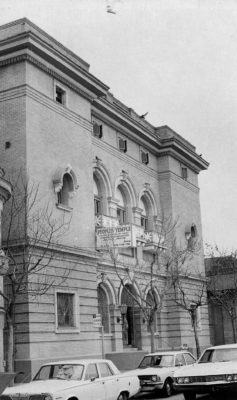
On the evening of November 18, 1978 in Jonestown, Jones ordered his congregation to drink cyanide-laced Flavor Aid. In all, at Jonestown, at a nearby airstrip in Port Kaituma, and in Georgetown, 918 people died, including over 270 children, resulting in the greatest single loss of American civilian life in a non-natural disaster until the September 11 attacks. Congressman Ryan was among those killed at the airstrip.”
-wikipedia (read entire article at https://en.wikipedia.org/wiki/Peoples_Temple_in_San_Francisco#:~:text=The%20Peoples%20Temple%2C%20the%20new,move%20to%20Guyana%20in%201977.
.
.
.
.
.
A little Architectural history before the temple became forever known as the Peoples Temple and the tragedy that ensued…..

“The first of the three [temples on the south side of Geary between Fillmore and Steiner], the Albert Pike Memorial Scottish Rite Temple, at 1859 Geary, was designed by eccentric architect Thomas Peterson Ross. A Chronicle article of May 29, 1904, included a sketch of Ross’s proposed building, which was three stories in yellow brick and terra cotta, with Romanesque revival influences. It was valued at $80,000. The building appears to have been complete on the 1905 Sanborn map. Named after Albert Pike, an attorney, writer, educator, soldier — and most of all a renowned Free Mason — the Masons continued to use the building until the mid-1960s. Architect Ross, a Scot, immigrated to the United States in 1883, and was a fairly prolific San Francisco designer. His other important works include the Sing Fat and Sing Chong Buildings on either side of California Street at Grant Avenue, which are credited with inspiring other post-1906 pagoda-style buildings in Chinatown. Ross also designed an eclectic, mosque-inspired pile for the Shriners at 650 Geary, today the Alcazar Theater, on which he placed an entry inscription in Arabic reading: “Great is Allah and Great is Ross the Architect.”” -newfilmore.com
.
.
.
.
.
A mini-documentary video on the rise and fall of Jim Jones and the People’s Temple, and the tragedy in Guyana on November 18, 1978.
.
.
.
.
.
Below is a succinct history of Jim Jones and The People’s Temple by history.com
“On November 18, 1978, Peoples Temple founder Jim Jones leads hundreds of his followers in a mass murder-suicide at their agricultural commune in a remote part of the South American nation of Guyana. Many of Jones’ followers willingly ingested a poison-laced punch while others were forced to do so at gunpoint. The final death toll at Jonestown that day was 909; a third of those who perished were children.
 Jim Jones was a charismatic churchman who established the Peoples Temple, a Christian sect, in Indianapolis in the 1950s. He preached against racism, and his integrated congregation attracted many African Americans. In 1965, he moved the group to Northern California, settling in Ukiah and after 1971 in San Francisco. In the 1970s, his church was accused by the media of financial fraud, physical abuse of its members and mistreatment of children. In response to the mounting criticism, the increasingly paranoid Jones invited his congregation to move with him to Guyana, where he promised they would build a socialist utopia. Three years earlier, a small group of his followers had traveled to the tiny nation to set up what would become Jonestown on a tract of jungle.
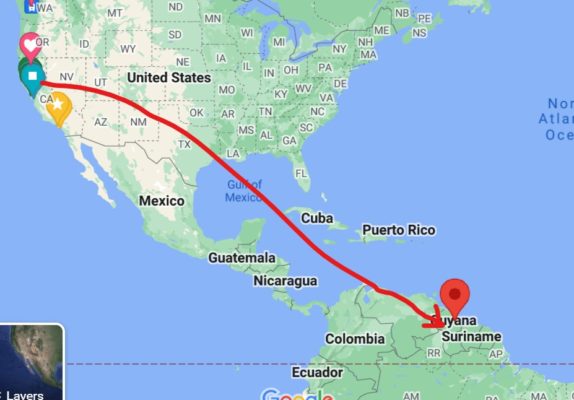
Jonestown did not turn out to be the paradise their leader had promised. Temple members worked long days in the fields and were subjected to harsh punishments if they questioned Jones’ authority. Their passports were confiscated, their letters home censored and members were encouraged to inform on one another and forced to attend lengthy, late-night meetings. Jones, by then in declining mental health and addicted to drugs, was convinced the U.S. government and others were out to destroy him. He required Temple members to participate in mock suicide drills in the middle of the night.
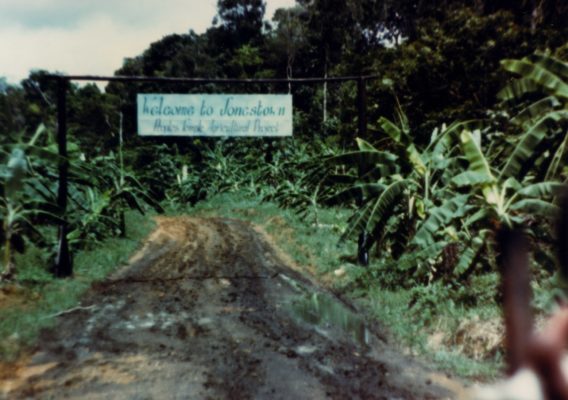
In 1978, a group of former Temple members and concerned relatives of current members convinced U.S. Congressman Leo Ryan, a Democrat of California, to travel to Jonestown and investigate the settlement. On November 17, 1978, Ryan arrived in Jonestown with a group of journalists and other observers. At first the visit went well, but the next day, as Ryan’s delegation was about to leave, several Jonestown residents approached the group and asked them for passage out of Guyana. Jones became distressed at the defection of his followers, and one of Jones’ lieutenants attacked Ryan with a knife. The congressman escaped from the incident unharmed, but Jones then ordered Ryan and his companions ambushed and killed at the airstrip as they attempted to leave. The congressman and four others were murdered as they boarded their charter planes.

Back in Jonestown, Jones commanded everyone to gather in the main pavilion and commit what he termed a “revolutionary act.” The youngest members of the Peoples Temple were the first to die, as parents and nurses used syringes to drop a potent mix of cyanide, sedatives and powdered fruit juice into children’s throats. Adults then lined up to drink the poison-laced concoction while armed guards surrounded the pavilion.
When Guyanese officials arrived at the Jonestown compound the next day, they found it carpeted with hundreds of bodies. Many people had perished with their arms around each other. A few residents managed to escape into the jungle as the suicides took place, while at least several dozen more Peoples Temple members, including several of Jones’ sons, survived because they were in another part of Guyana at the time.” -history.com

























































































































MUSEUM QUALITY PRINTS can be purchased from any image on my website. If you just want a simple print that’s rolled in a tube, that’s great! If you want it framed, we’ll do that too! We also sell canvas prints, metal prints, and more. All of our premium papers and canvases are acid-free and, with proper care, will last for generations. Unframed prints are shipped in sturdy 1/4″ cardboard tubes and include a 1″ white border to allow for future matting and framing. Prints may also be shipped in flat packaging upon request. Pick your favorite art and photography from my website, and a museum-quality masterpiece will be on its way to you within 2 – 3 business days!
FRAMED PRINTS are offered in 230 frames and 100 mats which can be used to create museum-quality masterpieces from any image on my site! All framed prints are assembled, packaged, and shipped by our expert framing staff and arrive “ready to hang” with pre-attached hanging wire, mounting hooks, and nails. Pick your favorite art and photography from my site, and a museum-quality masterpiece will be on its way to you within 2 – 3 business days!
CANVAS PRINTS are printed on one of our premium canvases and then stretched on a wooden frame of 1.5″ x 1.5″ stretcher bars. All canvas prints are shipped “ready to hang” with a hanging wire, mounting hooks, and nails. Canvas prints are offered in two different wrap styles, three different border styles, and hundreds of frame options. Pick your favorite art and photography from my site, and a museum-quality masterpiece will be on its way to you within 2 – 3 business days!
METAL PRINTS are printed directly onto a sheet of 1/16″ thick aluminum! The aluminum sheet is offset from the wall by a 3/4″ thick wooden frame which is attached to the back. The wooden frame on the back of the print includes a hanging wire for easy mounting on your wall. All metal prints arrive “ready to hang” with mounting hooks and nails. Metal prints are extremely durable. They’re lightweight. They won’t bend, and they’re water resistant. The high gloss of the aluminum sheet complements the rich colors of any image to produce stunning results.
Return policy is very simple. If you're not happy with a purchase, for any reason, you can return it to us within 30 days of the order date. As soon as it arrives, we'll issue a full refund for the entire purchase price. Please note - we do not reimburse the outgoing or return shipping charges unless the return is due to a defect in quality. Pick HERE if you want to return a product now. Satisfaction Guarantee 877-807-5901